
Beige Color Meaning | Connotations & Hex Codes
Beige may be shorthand for dull and boring, but the neutral, unobtrusive qualities that give it a bad rep also make it something of a timeless classic. This article explores the meanings beige can express and suggests color pairings to experiment with for your own projects, complete with hex codes.
Test your color-matching skills in our interactive color mixing game.
Continue reading: Beige Color Meaning | Connotations & Hex Codes
White Color Meaning | Connotations, Shades & Codes
The color white helps create contrast, balance, and clarity in designs and layouts.
As the lightest of all colors, white is the natural opposite of black and its frequent partner in timeless, elegant palettes. Never really out of fashion, a shade of white was selected as the Pantone Color of the Year 2026.
But what does the color white mean? This article explores the meanings you can convey with white, examines the question of whether it’s even a color at all, and provides helpful white color codes and pairing suggestions.

Ready for a color challenge? Try our Color Mixing Game.
Continue reading: White Color Meaning | Connotations, Shades & Codes
Black Color Meaning | Connotations, Shades & Codes
Used thoughtfully, black does more than just add contrast: it can be a powerful color choice in shaping brand identity and give interiors a refined, enduring appeal.
And there’s more nuance to black than you might think, as many shades of black contain subtle hints of colors like green, brown, and blue.
This article explores the meaning of black in design and branding, tackles the question of whether you should even call black a color, provides the hex codes for various shades of black, and suggests some black color combinations.

Test your color-matching skills in our interactive color mixing game.
Continue reading: Black Color Meaning | Connotations, Shades & Codes
Lime Green Color Meaning | Connotations & Hex Code
Lime green is a fresh and energetic pure green that’s typically:
- Lighter and less yellow-leaning than kelly green
- Much lighter than forest green
- A lighter and purer green (less yellow) than apple green
- Less “minty” (less cyan) than spring green
- Darker, softer, and less yellow-leaning than neon green, lawn green, and chartreuse
You’ll find lime green’s hue at the midpoint between yellow and cyan on digital color wheels, like Quillbot’s free online color wheel.

Put your design instincts to the test with our color matching game.
Continue reading: Lime Green Color Meaning | Connotations & Hex Code
Gray Color Meaning | Connotations & Code
You make gray by mixing black and white paint or—on screens—by setting the red, green, and blue values to the same level. A perfectly neutral gray has no color tint (no hue you could put a name to like “orange,” “purple,” or “yellow”)—it’s just lighter or darker, from white through mid-gray to black.
To find shades of pure gray using a color wheel tool like Quillbot’s free online color wheel, enter #000000 as your base color and move the slider around the outer wheel.

Put your design instincts to the test with our color matching game.
Continue reading: Gray Color Meaning | Connotations & Code
Pastel Green Color Meaning | Connotations & Hex Code
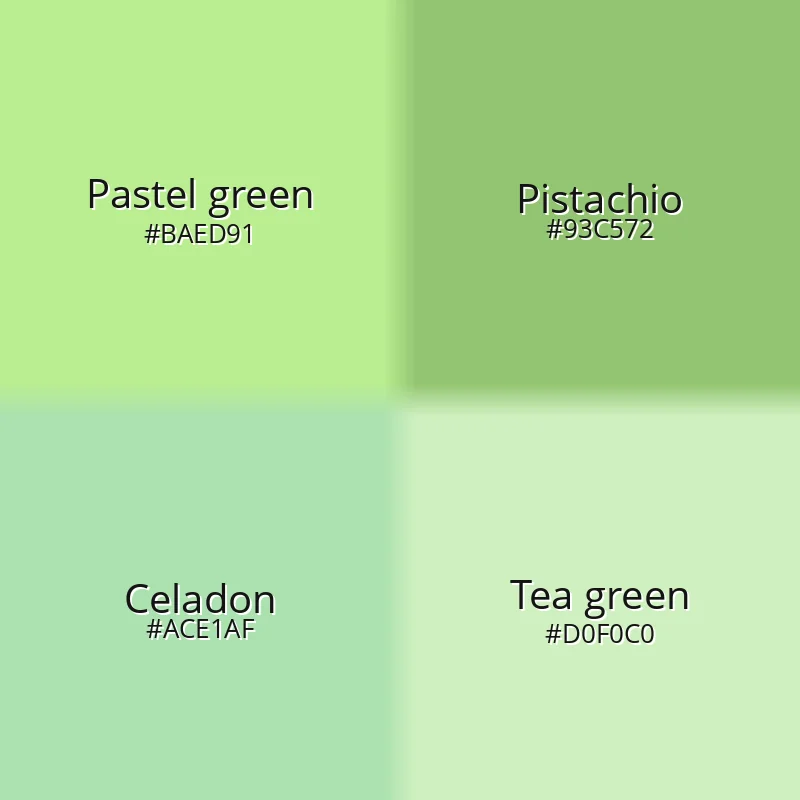
Pastel green is a light, soft shade of green that’s typically:
- Lighter and less muted than pistachio
- Darker and more vivid than tea green
- Brighter and more yellow-leaning than celadon
You can find the perfect shade of pastel green for your project on Quillbot’s free online color wheel. Just start with the base hex code #BAED91 and adjust the color by moving the main pointer. Use the outer wheel to fine-tune lightness.
Ready for a color challenge? Try our Color Mixing Game.
Continue reading: Pastel Green Color Meaning | Connotations & Hex Code
Forest Green Color Meaning | Symbolism & Hex Code
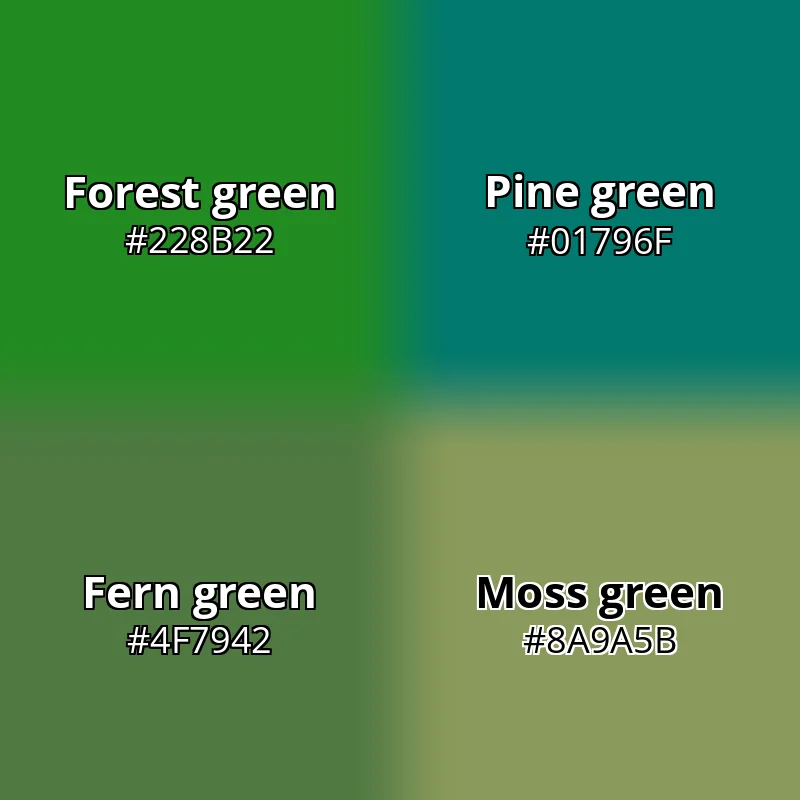
Forest green typically describes a deep, natural green reminiscent of the leaves of trees and foliage in temperate climates. It’s usually a darker, more purely green color than pine green, richer and deeper than fern green, and less yellow-leaning than moss green.
Put your design instincts to the test with our color matching game.
Continue reading: Forest Green Color Meaning | Symbolism & Hex Code
Seafoam Green Color Meaning | Hex Code & Uses
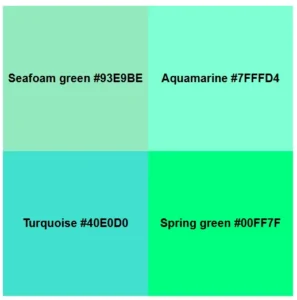
Seafoam green typically describes a soft, pale shade of minty green that’s slightly greener and less saturated than aquamarine, lighter and less blue than turquoise, and much paler than spring green.
This article explores the meaning of seafoam green, compares it with similar green shades, provides example hex codes, and shows you how to create your own seafoam green digital wallpaper designs.
Ready for a color challenge? Try our Color Mixing Game.
Continue reading: Seafoam Green Color Meaning | Hex Code & Uses
Olive Green Color Meaning | Connotations & Hex Code
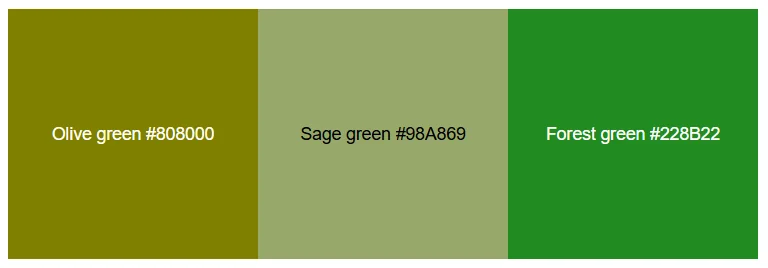
Named after unripened green olives, olive green is a muted, earthy shade of green that sits at the yellow end of the green spectrum on the color wheel.
Colors described as olive green are typically darker and more vivid than sage green and more yellow-leaning than forest green.
Ready for a color challenge? Try our Color Mixing Game.
Continue reading: Olive Green Color Meaning | Connotations & Hex Code
Emerald Green Color Meaning | Connotations & Hex Code
If you’re looking for a shade of green that’s bright and vivid but not too loud, emerald green might be exactly what you’re after.
This article covers emerald green’s defining characteristics, its most common associations, key color codes, and how to create an emerald green palette.

Just upload an image containing the kind of colors you’re looking for, and this free online tool will give you the color codes of its palette, which you can use as a starting point.
Put your design instincts to the test with our color matching game.
Continue reading: Emerald Green Color Meaning | Connotations & Hex Code